REVIEW · OSAKA
Osaka: Private Food Tour & Bar Hopping in Namba
Book on Viator →Operated by DeepExperience · Bookable on Viator
Namba smells like dinner and beer. This 3-hour food and bar-hopping style stroll in lively Namba is built for people who want Osaka flavor fast, with a route that gets you off the main sidewalks and into the energy of Ura Namba. I especially like the way it mixes “must-see” Osaka sights with real eating stops, from the Glico Man photo moment to comfort-food classics like kushikatsu and okonomiyaki.
The one thing to consider is that food and drink inclusion depends on your ticket option. If you booked the lower-priced, expense-excluded style, you may be asked to pay for what you order at the stops, which can feel like a surprise if you expected everything covered.
In This Review
- Key highlights you should care about
- Why Namba bar hopping feels different (and why it works)
- Meeting at Dotonbori and getting your bearings fast
- Kushikatsu Shirotaya: fried skewers, simple rules, big satisfaction
- Ukiyo Koji and Issun-boshi: food breaks with personality
- Hozenji Temple: mossy calm inside the noise
- Honke Otako Hozenji: okonomiyaki in a lantern-lit setting
- Drinks, meal inclusion, and why your ticket matters
- Guide style in Namba crowds: the real secret sauce
- How this 3-hour route fits your Osaka plans
- Who should book this (and who might not)
- Practical tips so you enjoy every stop
- Should you book Osaka Private Food Tour & Bar Hopping in Namba?
- FAQ
- How long is the Osaka food tour in Namba?
- What is the price per person?
- How many people are in the group?
- Is food and drink included?
- What stops are included during the tour?
- Where does the tour start and end?
- Are the restaurants guaranteed?
- Can I cancel for free?
Key highlights you should care about
- Iconic Glico Man sign photos to anchor your Namba visit
- Kushikatsu at Kushikatsu Shirotaya Main store with skewers and dipping sauces
- Hozenji Temple area vibes including the mossy Mizukake Fudo-o statue
- Honke Otako Hozenji okonomiyaki in a lantern-lit setting
- Small group max of 6 for easier pacing in crowded streets
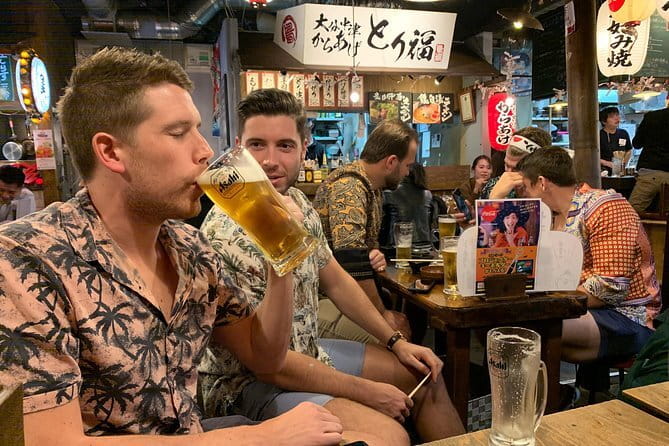
- One drink and one food per stop for the expense-included option
Why Namba bar hopping feels different (and why it works)
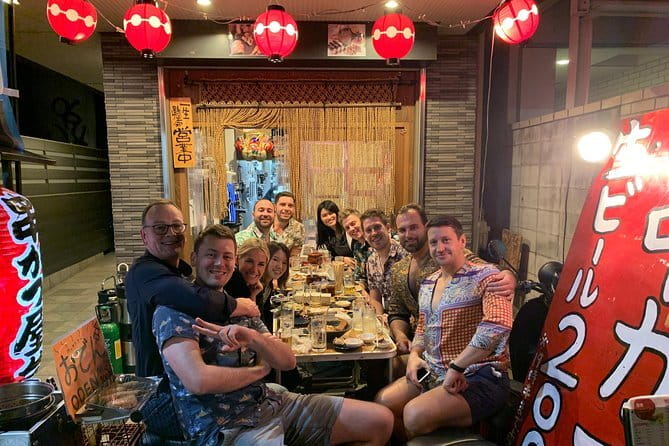
Osaka’s food culture is built around moving. You don’t just sit and order a single dish. You graze, you sip, you snack, and you keep going until you genuinely feel done. That’s the logic behind this Namba experience: it’s timed and structured so you’re not wandering hungry, guessing where to go next.
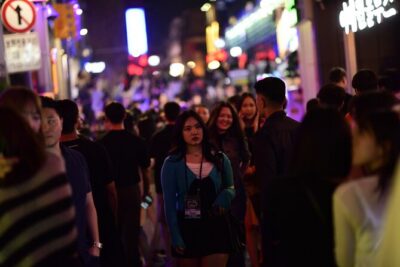
A big part of the value is the neighborhood logic. Namba is loud and famous, but the tour’s route pushes you into the busier edges and backstreet-feeling lanes of the area. The payoff is simple: you get a taste of how locals pace their nights, without spending your whole trip stuck behind other tourists.
Also, this is the kind of food tour that doesn’t pretend every stop is an awards-winning masterpiece. You’re getting honest, local classics. That makes it easier to enjoy even if you’re picky, because you’ll still have familiar categories—fried skewers and savory pancakes—rather than a weird one-off you can’t pronounce.
You can also read our reviews of more tours and experiences in Osaka.
Meeting at Dotonbori and getting your bearings fast
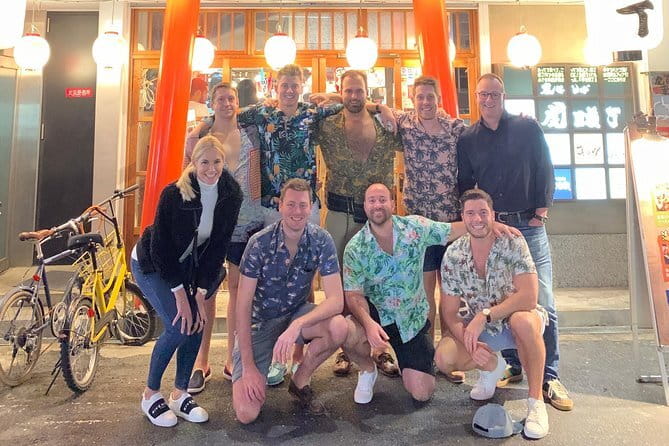
You start near Dōtonbori at the Osaka Shochiku building area (the meeting point is listed by the Osaka松竹座ビル address on Dōtonbori). From there, the experience naturally orients you to what makes this zone so recognizable: neon, crowd flow, and side streets that branch off like paths in a maze.
One of the first things you do is take photos at the Glico Man sign. It’s an easy win if you’re seeing Osaka for the first time, because it gives you a landmark within minutes. It also helps if your brain needs something concrete to latch onto while everything else is moving fast around you.
Timing matters here. Doing the iconic photo early means you’re less likely to be distracted later when you’re hungry and trying to find the next storefront. You’re basically setting your mental map before the eating begins.
Kushikatsu Shirotaya: fried skewers, simple rules, big satisfaction
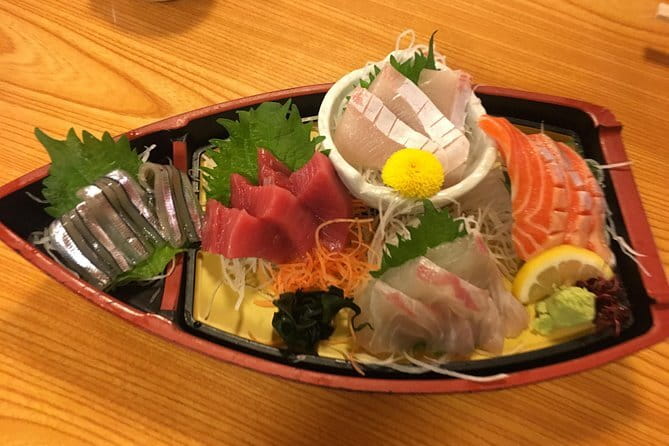
At Kushikatsu Shirotaya Main store, you’ll have your first proper food stop: skewered meats and veggies, deep-fried and served with dipping sauces. It’s straightforward on purpose. Kushikatsu is one of Osaka’s signature snacks because it’s easy to share, easy to order, and easy to keep eating without a long sit-down meal.
This stop runs about 40 minutes, which is a sweet spot. You get enough time to try a solid selection, but you’re not stuck waiting forever while the night gets louder around you. In practice, that matters because Namba lines can build quickly when restaurants get popular.
How I’d approach it as a strategy: think of kushikatsu as your “build the appetite” course. It’s crunchy, salty, and works as a reset button before you move to something smoother like okonomiyaki later. If you want to pace yourself, kushikatsu is also the easiest first stop to slow down with, because the bites are smaller than typical main dishes.
Ukiyo Koji and Issun-boshi: food breaks with personality
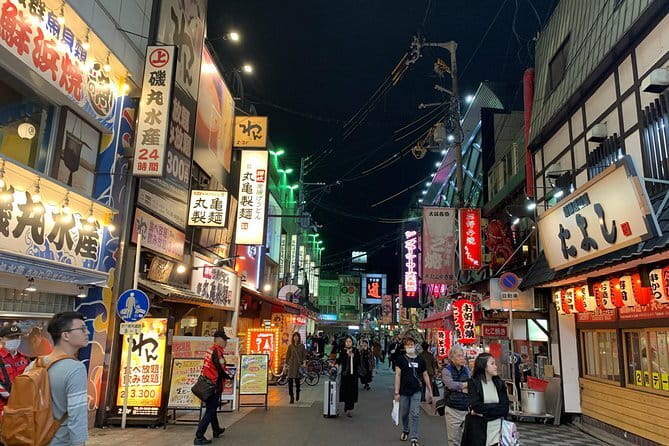
Between major meals, the tour includes a quick look at interesting streets and small cultural sights, including the Issun-boshi shrine on the Ukiyo Koji historical street area. This part is brief, but it changes the rhythm of the evening.
Why it matters: if your only goal is eating nonstop, you’ll end up feeling like a food machine. A short pause with something visual gives your stomach a moment to reset and gives your trip a story besides just food.
It also helps that Osaka does this well—tiny shrines and short, themed streets appear right where you’d expect only shopping. So you’re not just chasing restaurants; you’re seeing why Namba feels like it’s always in motion.
Hozenji Temple: mossy calm inside the noise
One of the emotional contrasts on this walk is Hozenji Temple, specifically the area around the moss-overgrown statue of Mizukake Fudo-o. You step into a calmer-feeling pocket even while you’re still in a commercial district.
This stop is a reminder that Osaka’s nightlife doesn’t erase its old layers. Hozenji sits right in the middle of everyday street life, which is exactly what makes it memorable. It’s not a distant museum stop. It’s part of the street scene.
The tour timing also keeps it practical. You’re not asked to spend forever reading or wandering. You get enough time to notice the details and get your photos, then you move on while your energy is still good.
If you’re the kind of traveler who likes meaning with your food, this is a strong moment. If you’re mostly there to eat, it still works as a visual reset before you go back to the louder, snack-heavy parts of Namba.
Honke Otako Hozenji: okonomiyaki in a lantern-lit setting
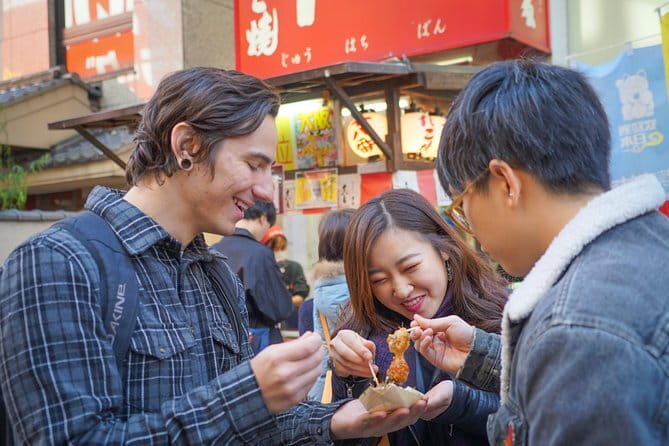
Next comes Honke Otako Hozenji, known for okonomiyaki—Osaka-style savory pancakes. The storefront has a lantern-lit vibe, which makes the meal feel like a proper night in the neighborhood rather than just another restaurant stop.
This second main food time is also about 40 minutes, which keeps the whole experience balanced. You’re not stuck with one heavy dish too long. You finish, you digest a bit, and you still have enough energy to enjoy the surrounding area.
Okonomiyaki is a smart pairing after kushikatsu. Fried skewers are crisp and oily; okonomiyaki is warm, savory, and more comforting. Together, they cover two different textures of Osaka comfort food without making you choose between fried overload and pancake fatigue.
Drinks, meal inclusion, and why your ticket matters
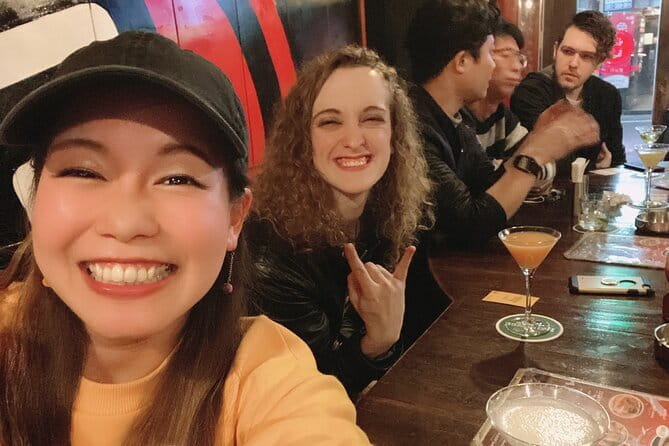
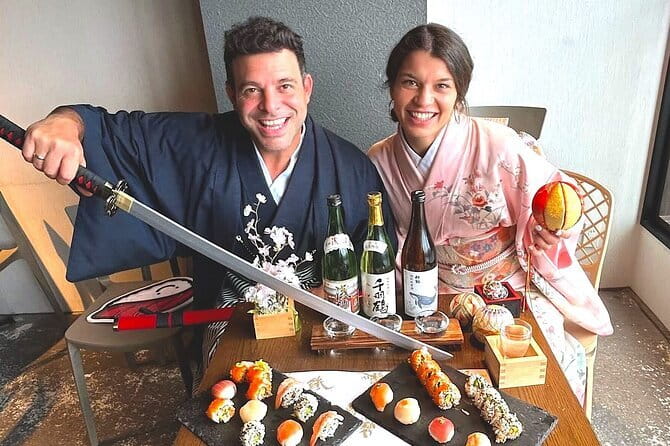
Let’s talk value honestly. The price you’re seeing is $48.78 per person, and the tour runs about 3 hours with a maximum group size of 6. That small group size is part of the value because Namba gets tight, fast—smaller groups help you keep moving without a long human bottleneck behind you.
But here’s the practical caution: the experience includes one drink and one food at each store visited only for the expense-included version (not for every ticket type). If you booked the lower-priced option that doesn’t cover expenses, you may have to pay for food and drinks at the restaurants.
That’s not a reason to avoid it. It’s a reason to double-check what your specific booking covers before you meet. When this got misunderstood for at least one group, it created a disappointment that could have been prevented by knowing the difference between covered and not-covered options.
Guide style in Namba crowds: the real secret sauce
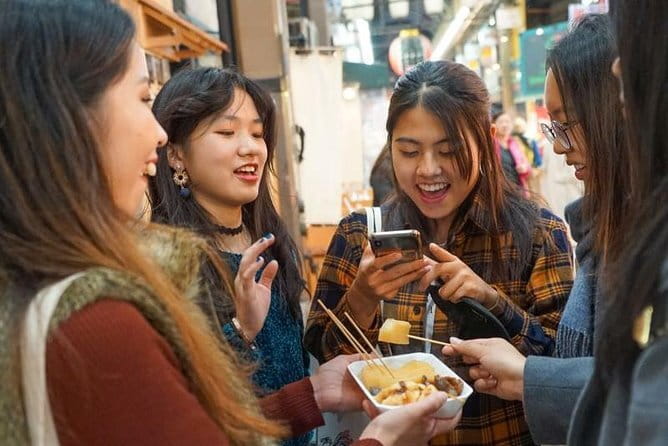
A tour is only as good as its street skills. In this case, the guide experience can make or break the night, because Namba crowds can be intense.
One standout detail: Yayoi was praised for making the experience feel relaxing while maneuvering through heavy foot traffic like she’s done it a thousand times. That kind of crowd management matters because it protects your energy. Instead of wasting time doing awkward stop-and-go navigation, you keep your momentum and spend your attention on choosing what to eat.
Also, the best kind of guide asks what you like. The approach described here included asking preferences and then getting you moving quickly. That’s ideal for Osaka food touring because it keeps you from getting stuck in decision mode while everyone around you is ordering.
If you tend to feel stressed in busy districts, this is a strong argument for booking a guided format like this rather than trying to brute-force your own plan.
How this 3-hour route fits your Osaka plans
Three hours is long enough to feel like a real food program, but short enough that it doesn’t swallow your whole evening. It’s also structured with landmark timing—starting around Dōtonbori and ending at the Glico Sign area—so you don’t feel trapped.
I like this length for first-timers because it covers the basics quickly: a big visual hook (Glico Man), two Osaka classics (kushikatsu and okonomiyaki), plus a temple interlude that keeps the night from becoming one long food line.
It’s also good for repeaters who already know Dōtonbori’s main strip. Even if you’ve walked past Hozenji before, a route that includes the “in-between” streets—plus food stops selected for the area—can still feel fresh.
Who should book this (and who might not)
This experience is best for:
- First-timers to Namba and Dōtonbori who want a guided start and photo moments
- People who like snack-style eating more than one formal sit-down meal
- Travelers who want a small-group walk (max 6) to keep the pace comfortable
- Anyone who wants both Osaka street energy and a quieter pause at Hozenji Temple
It might feel less ideal if:
- You booked assuming all food and drinks are fully covered regardless of ticket type (the expense-included vs expense-excluded difference is important)
- You prefer longer, sit-down dining experiences over quick, rotating stops
- You’re trying to eat incredibly slowly and would rather control every order yourself without group timing
Practical tips so you enjoy every stop
You’ll enjoy this most if you treat it like a plan, not a strict checklist.
Wear comfortable shoes. Namba streets and storefront areas can get crowded, and you’ll be moving between spots. Also, go a little hungry if you can. This is a “eat until you drop” style concept in spirit, and even with two core food stops, you’ll likely want to keep your energy up.
Lastly, before you order anything, check what’s covered under your booking. The tour’s inclusion rules depend on the exact option you chose, and knowing that upfront makes the whole night smoother.
Should you book Osaka Private Food Tour & Bar Hopping in Namba?
Yes, with one smart condition: confirm your ticket’s food and drink inclusion before you go. If your option includes the one drink and one food per stop, you’ll get a well-paced 3-hour introduction to Osaka favorites in a small group, with standout moments at Glico Man and Hozenji Temple.
If you pick the expense-excluded style, it can still be worth it, but you should enter knowing you’ll likely pay for what you order. Either way, the guide-led crowd navigation is a big advantage in Namba, and the mix of kushikatsu, okonomiyaki, and street sights is a solid way to experience the city’s night energy without guessing.
FAQ
How long is the Osaka food tour in Namba?
It runs for about 3 hours.
What is the price per person?
The price is $48.78 per person.
How many people are in the group?
The tour has a maximum of 6 travelers.
Is food and drink included?
Food and drink inclusion depends on your ticket option. The experience includes one drink and one food at each store visited for the Private Tour and the Expense-Included Group Tour.
What stops are included during the tour?
The experience includes a photo stop at the Glico Man sign, kushikatsu at Kushikatsu Shirotaya Main store, time around Hozenji Temple and its Mizukake Fudo-o statue, and okonomiyaki at Honke Otako Hozenji.
Where does the tour start and end?
It starts near Dōtonbori at the Osaka松竹座ビル meeting point address, and it ends at the Glico Sign in Dōtonbori.
Are the restaurants guaranteed?
The exact restaurant may change depending on factors like seat availability, closing days, and guest preferences.
Can I cancel for free?
Yes. You can cancel up to 24 hours in advance for a full refund. If you cancel within 24 hours of the start time, the amount paid is not refunded.